
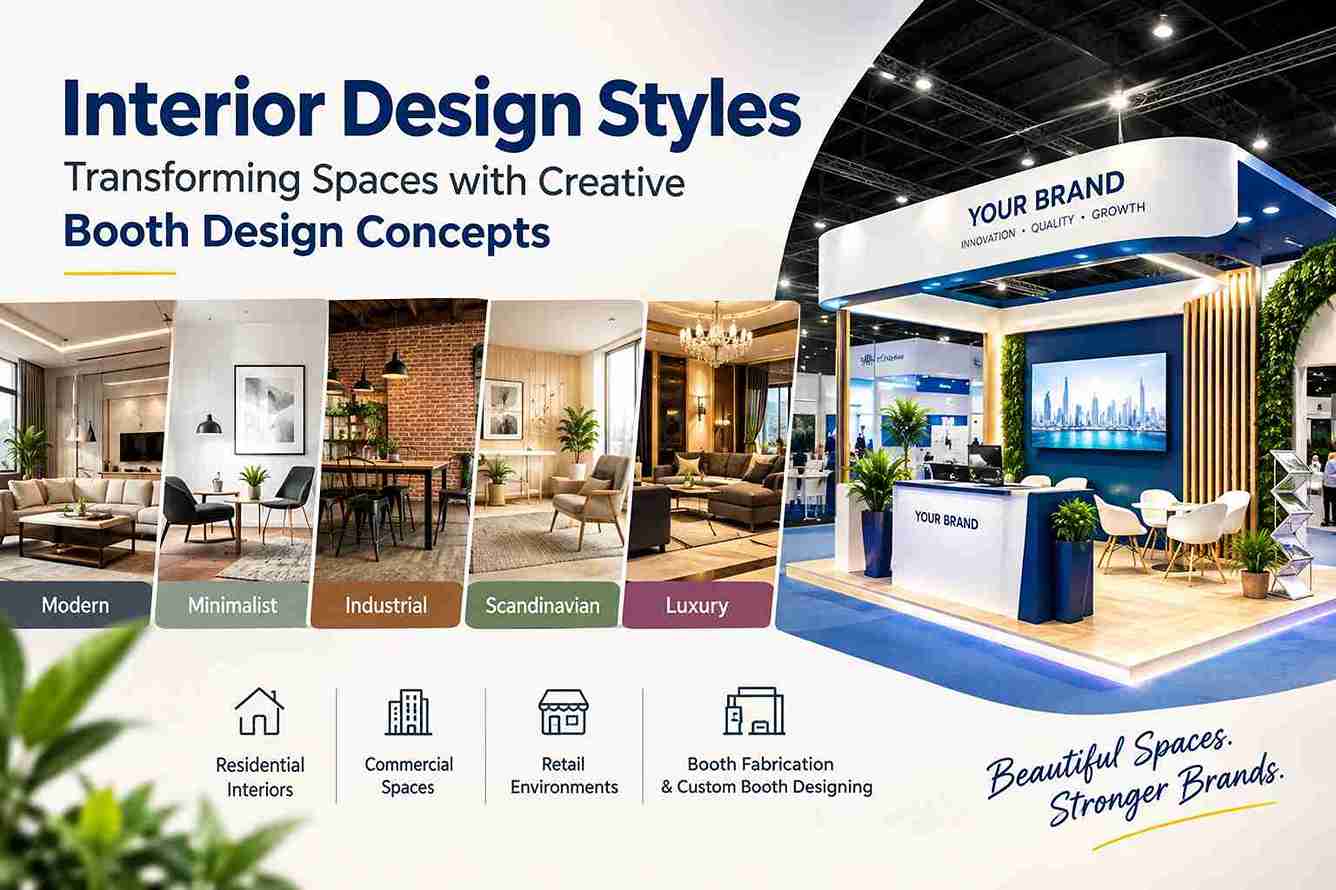
Interior design is more than selecting attractive furniture, colours, or decorative elements. It is about creating a space that reflects a specific personality, purpose, and visual identity. From residential interiors to commercial environments and exhibition spaces, choosing the right interior design styles can significantly influence how people experience a space.
Today, businesses and individuals have access to a wide range of design concepts, including modern, minimalist, contemporary, industrial, Scandinavian, traditional, and luxury styles. Understanding these styles makes it easier to select an approach that matches functional requirements while creating a visually appealing environment.
Popular Interior Design Styles for Different Spaces
- Modern Interior Design
Modern interior design focuses on simplicity, clean lines, practical layouts, and uncluttered spaces. Neutral colour palettes, functional furniture, smooth surfaces, and carefully selected lighting are commonly used to achieve a sophisticated appearance.
This style works particularly well in offices, commercial spaces, showrooms, and contemporary homes where functionality and a professional appearance are important.
- Minimalist Interior Design
Minimalism follows the principle of “less is more.” It uses limited colours, simple furniture, open spaces, and minimal decorative elements. Every component is selected with a specific purpose, helping create a calm and organised environment.
Minimalist concepts are also useful for exhibition displays because a clean layout can help visitors focus on important products, graphics, and brand messages without unnecessary visual distractions.
- Industrial Interior Design
Industrial interiors are inspired by warehouses, factories, and urban architecture. Exposed structures, metal elements, brick textures, wood finishes, and functional lighting are common features.
The industrial style can provide a distinctive character to restaurants, offices, retail stores, studios, and creative workspaces.
- Scandinavian Interior Design
Scandinavian design combines functionality, simplicity, natural materials, and comfortable aesthetics. Light colours, wooden textures, natural lighting, and practical furniture help create a warm and welcoming environment.
This style is ideal for people who want an interior that feels spacious, comfortable, modern, and visually balanced.
- Traditional and Luxury Interior Design
Traditional interiors often feature classic furniture, decorative details, rich materials, and timeless colour combinations. Luxury design, meanwhile, places greater emphasis on premium finishes, sophisticated lighting, statement furniture, and elegant detailing.
These styles can be adapted for hotels, premium offices, corporate environments, residences, and high-end retail spaces.
Read Related – Global Event Company India: Memorable Experiences for Businesses
Why the Right Design Style Matters
Selecting an appropriate design style can influence functionality, aesthetics, customer perception, and brand communication. For businesses, the design of a physical space can become an extension of their brand identity.
A well-planned commercial interior can make customers feel comfortable while helping employees work efficiently. Similarly, an exhibition booth needs to attract attention quickly and communicate a company’s identity within a limited area.
This is where professional planning, material selection, lighting, space utilisation, and visual communication become particularly important.
Interior Design Concepts for Exhibition Booths
Exhibitions and trade shows provide businesses with an opportunity to interact directly with potential customers and industry professionals. However, an exhibition area is often surrounded by numerous competing brands. A visually appealing and strategically planned booth can help a company stand out.
Professional booth fabrication combines design, construction, materials, lighting, branding, and practical functionality to create an exhibition environment that supports a company’s objectives.
A booth can be designed around different interior design styles depending on the brand and industry. A technology company may prefer a futuristic and minimalist concept, while a luxury brand may benefit from premium finishes and elegant detailing.
The Role of Custom Booth Designing
Custom booth designing allows businesses to create exhibition spaces according to their specific requirements instead of relying on standard booth layouts. The design can incorporate brand colours, logos, product displays, meeting areas, storage spaces, digital screens, lighting, and interactive elements.
Customisation is particularly valuable for companies participating in major exhibitions where brand differentiation is important. A thoughtfully designed booth can create a stronger visual impression while providing visitors with a comfortable space to explore products and services.
The process generally begins with understanding the brand, exhibition objectives, available space, target audience, and functional requirements. Designers can then develop a concept that combines aesthetics with practical usability.
Combining Style, Functionality, and Brand Identity
The most effective design does not focus solely on appearance. It balances aesthetics with functionality. Furniture placement, visitor movement, lighting, display positioning, signage, and accessibility should all be considered during the planning stage.
For exhibition environments, the same principle applies. An attractive booth may capture attention, but an effective layout should also make it easy for visitors to understand the brand and engage with representatives.
Whether designing an office, retail environment, hospitality space, or exhibition booth, consistency is essential. Materials, colours, typography, lighting, and architectural elements should work together to create a unified visual experience.
Read Related – Exhibition Stall Design Ideas: Creative Concepts to Attract Visitors
Choosing the Right Interior Design Style
There is no single interior design style that works for every project. The right choice depends on the space, purpose, audience, budget, brand identity, and desired atmosphere.
Businesses should consider whether they want their environment to appear modern, luxurious, welcoming, creative, minimal, traditional, or industrial. For exhibition booths, additional factors such as booth dimensions, event guidelines, visitor flow, product presentation, and installation requirements should also be considered.
Working with experienced design and fabrication professionals can help transform an initial concept into a practical and visually engaging space.
Conclusion
Exploring different interior design styles provides valuable inspiration for creating spaces that are attractive, functional, and purposeful. From minimalist and modern interiors to industrial, Scandinavian, traditional, and luxury concepts, each style offers unique opportunities for creative expression.
For businesses participating in exhibitions, these design principles can also be applied to booth environments. Professional booth fabrication and custom booth designing can combine creative interior concepts with branding, functionality, and visitor engagement.
Ultimately, successful design is about creating an environment that communicates the right message while providing a memorable experience. Whether it is a permanent commercial interior or a temporary exhibition booth, thoughtful design can make the space more distinctive, practical, and impactful.